

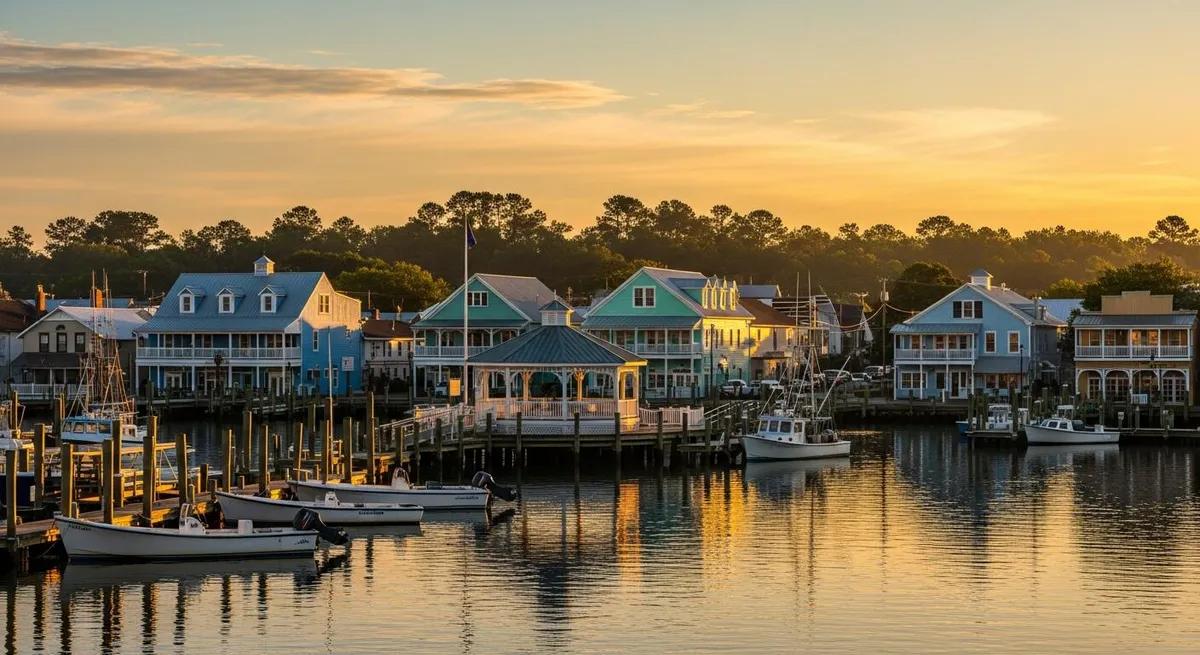
Swansboro: The Oldest Town on Onslow's Shore
A Town Older Than the Nation
Perched at the mouth of the White Oak River where it meets the Intracoastal Waterway, Swansboro is one of the oldest continuously occupied settlements in North Carolina. The town was officially incorporated in 1783 — the same year the American Revolution officially ended with the Treaty of Paris.
Before the Borough
The area around present-day Swansboro was settled as early as the 1730s. Theophilus Weeks established a trading post and ferry crossing at the site, making it a natural gathering point for settlers, merchants, and travelers moving along the coast. The location where the White Oak River met the Bogue Sound was ideal for maritime commerce and fishing.
The Bogue Banks Pirates
In the early 1700s, the inlets and barrier islands near Swansboro were well-known hideouts for pirates operating along the Outer Banks and Carolina coast. The shallow, maze-like waterways provided cover from British naval patrols. While Blackbeard is the most famous pirate associated with North Carolina, smaller crews were known to use the Bogue Inlet and Bear Island as staging areas for raids on merchant ships. Local legend holds that pirate treasure remains buried somewhere on the surrounding islands — though no one has found it yet.
A Port Town Takes Shape
The town was named for Samuel Swann, a prominent colonial figure and former Speaker of the North Carolina Assembly. By the late 1700s, Swansboro had developed into a small but busy port. Ships carried lumber, naval stores, and agricultural goods from the surrounding county to markets in Wilmington, Charleston, and beyond. The town's waterfront streets were lined with warehouses, a customs house, and the homes of merchants and ship captains.
The Civil War Years
During the Civil War, Swansboro's strategic location made it a target. Union forces occupied the area in 1862, using the waterways to control movement along the coast. The occupation disrupted the town's economy and left scars that took decades to heal.
Into the Modern Era
Swansboro remained a quiet fishing village for most of the 20th century. Its historic downtown, with buildings dating to the 1700s and 1800s, survived largely because there was no economic pressure to tear them down and rebuild. That same preserved character is what makes Swansboro a destination today — a town where you can walk streets that colonial merchants once walked, and look out over the same waters that pirates once sailed.